 Published on
13 Oct, 2026
Published on
13 Oct, 2026 Updated on 13 Oct, 2026
 5006
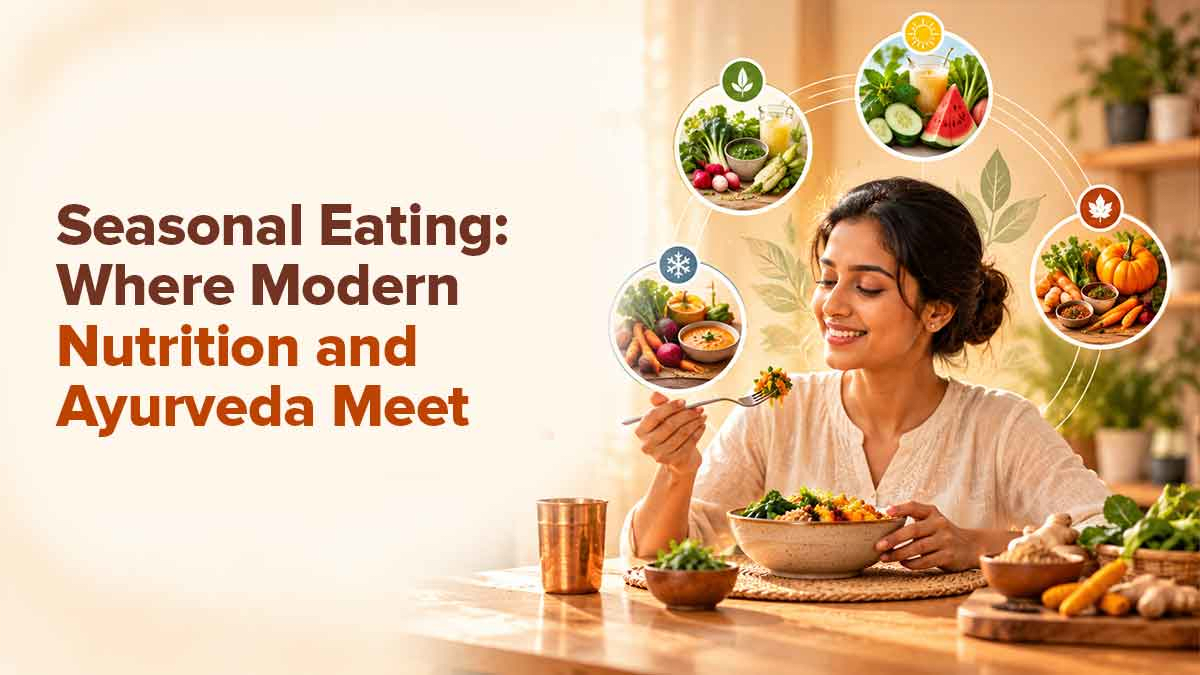
5006Have you ever seen that different weather affects our food preferences as well? On a hot summer afternoon, a bowl of fresh fruit and chilled water or soda feels refreshing, but in winter you feel like craving food that is warm, hot soups or comforting foods as well. These small changes often take place naturally, and we mostly overlook them.
The basic idea behind seasonal eating is choosing the foods that are easily available during particular seasons, and you find yourself adapting accordingly. And the interesting part is that both modern nutrition and Ayurveda recognize the changes according to the season and explain their benefits.
We live in a world where you will find the availability of every fruit and vegetable throughout the year; still, we use seasonal eating as an old tradition. However, it can be useful in a way of bringing more variety, nutrients and balance in our everyday life.
What Is Seasonal Eating?
Seasonal eating means eating a variety of foods, fruits, and vegetables that are naturally available during a particular season in your area. Instead of eating the same meal throughout the year, you allow yourself to try new varieties that are in line with the new weather and are available locally.
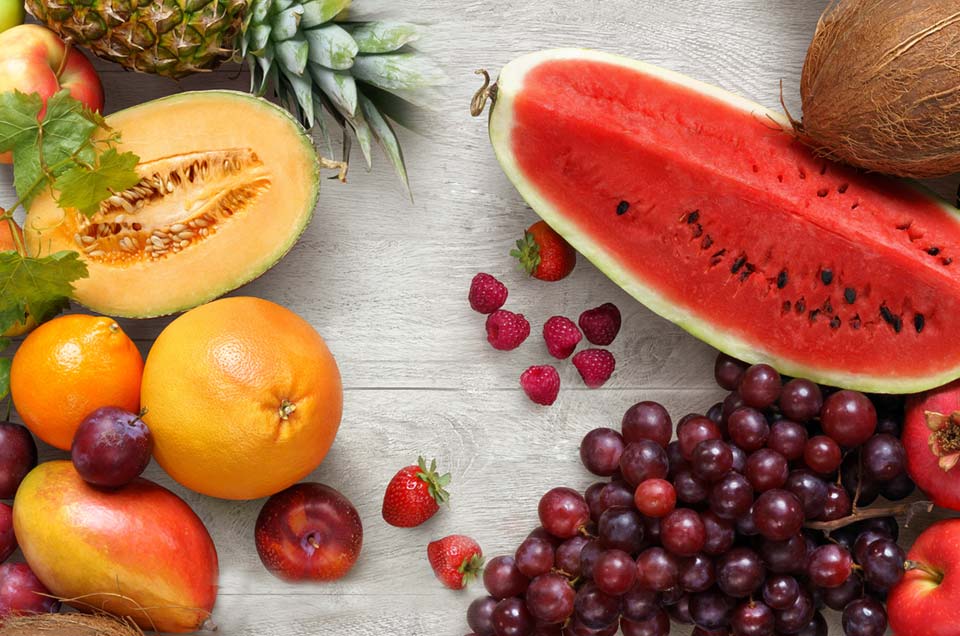
For example, summer in India brings a variety of fruits such as watermelon, muskmelon, litchi, and mangoes. During winter, many regions offer spinach, radish, carrot, and other leafy greens.
Eating seasonal food does not mean you leave out food or avoid food that is available all year round. Rice, eggs, milk, pulses, and many other staples are needed to maintain a balanced diet. The idea of eating seasonal food is to make it a regular part of your meals.
It can make your ration or grocery shopping even more interesting, as you get to explore different foods, try new recipes, and enjoy foods that are available in abundance.
How Modern Nutrition Looks At Seasonal Eating
If we look from a modern point of view, the biggest advantage you can receive from including seasonal eating is eating a wide variety of fruits and vegetables in your diet.
As we know, different plant-based foods contain different types of nutrients, minerals, and fibres. As we eat a variety of these, we can receive a broader range of nutrients than relying on similar types of food.
For instance, we know that eating carrots in winter is very beneficial, as they contain beta-carotene, which the body can convert into vitamin A. Citrus fruits contain vitamin C, while leafy green vegetables provide folate and vitamin K. Fruits like apples and pears provide us with dietary fibre, which helps in normal digestion.
Seasonal fruits are more affordable as they can be available to us more easily. Depending on how and in which condition it is grown and stored, it is fresher when it is purchased closer to harvest.
Modern nutrition offers a more practical message: enjoy a diverse range of fruits and vegetables, and adapt yourself to different preferences, and more nutritional needs.
What Does Ayurveda Say About Seasonal Eating?
Ayurveda has discussed different seasonal eating options for centuries now as a concept through Ritucharya. This term refers to adjusting dietary and lifestyle preferences according to different seasons.
In Ayurvedic thought, the close relationship between the environment and the human body is always discussed. Everyday changes in temperature, humidity, and daily conditions are considered relevant in deciding how much you should eat.
Ayurveda also uses the concept of Agni, commonly described as digestive fire, which is the ability to process food. Traditional guidance encourages people to consider different food combinations, digestion, and eating habits rather than focusing on ingredients themselves.
The most useful takeaway is to remain attentive to the body’s needs while choosing a varied and balanced diet.
Where Modern Nutrition And Ayurveda Meet
Although modern and Ayurvedic nutrition use different paths, there are several areas where their paths overlap.
Eating a variety of foods
Modern nutrition encourages diverse dietary choices because different foods provide different nutrients. Ayurveda also places emphasis on food variety and the quality of ingredients.
Including different types of foods, fruits and vegetables throughout the year, rather than being repetitive or limited.
Paying attention to digestion
Both of these approaches to eating habits influence food choices. Modern nutrition also considers factors such as fibre intake, food tolerance and meal composition. Ayurveda emphasizes appetite, comfort and suitable meal routines.
Eating slowly, drinking more water and noticing practical habits can complement a balanced diet.
Adapting to the weather
Hot weather can make water-rich foods and refreshing foods more appealing, while colder days encourage people to eat warm food like soups, cooked vegetables, and comforting meals.
It is important to choose your comfort and overall diet, and more important of your overall diet than going for the more rigid food rules.
Common Myths About Seasonal Eating
One of the biggest misconceptions about eating seasonal foods automatically prevents you from illness. It supports general health; no particular fruit or vegetable can guarantee against infection medical conditions.
Anoher myth is the food available other than seasonal eating are unhealthy. Storage, freezing, and transportation allow modern farming to keep nutritious foods available throughout the year.
Seasonal eating works best as a flexible approach to food selection, not as a promise of perfect health.
Conclusion
Modern nutrition helps explain the importance of dietary variety, fibre, vitamins and minerals, and balanced meals. Ayurveda adds a traditional perspective that encourages people to consider seasonal changes, food preparation, digestive comfort and daily routines.
Ultimately, the best seasonal diet is not the one with the strictest rules. It is one that nourishes you, fits your lifestyle, and can be maintained throughout the year.